.jpg?width=600&name=Sami%20Paassola%20(2).jpg)
-
Services
- Leadership and Management
-
Sales and Growth
- Sales and Growth
-
New Customer Acquisition
-
Sales
-
Account Growth
- Negotiation and Presentation Skills
-
Personal Growth
- Personal Growth
-
For Leaders
-
For Professionals
-
-
New Customer Acquisition
-
Sales
-
Account Growth
-
For Leaders
-
For Professionals
-
- Investors
“Responding to requests for quotation is our bread and butter. If customers don’t have projects, there are no requests for quotation. But you can still look after the customer relationship,” says Jouni Metsämäki, CEO of Kerabit.
As the construction market tightened and requests for quotation dropped, Kerabit CEO Jouni Metsämäki saw a need for the company’s sales experts to be more active with customers. They handled incoming requests for quotation well, but there was no agreed, shared way of serving customers proactively. Kerabit needed to get moving quickly, with a model for increasing customer activity that could be managed and sustained in everyday work.
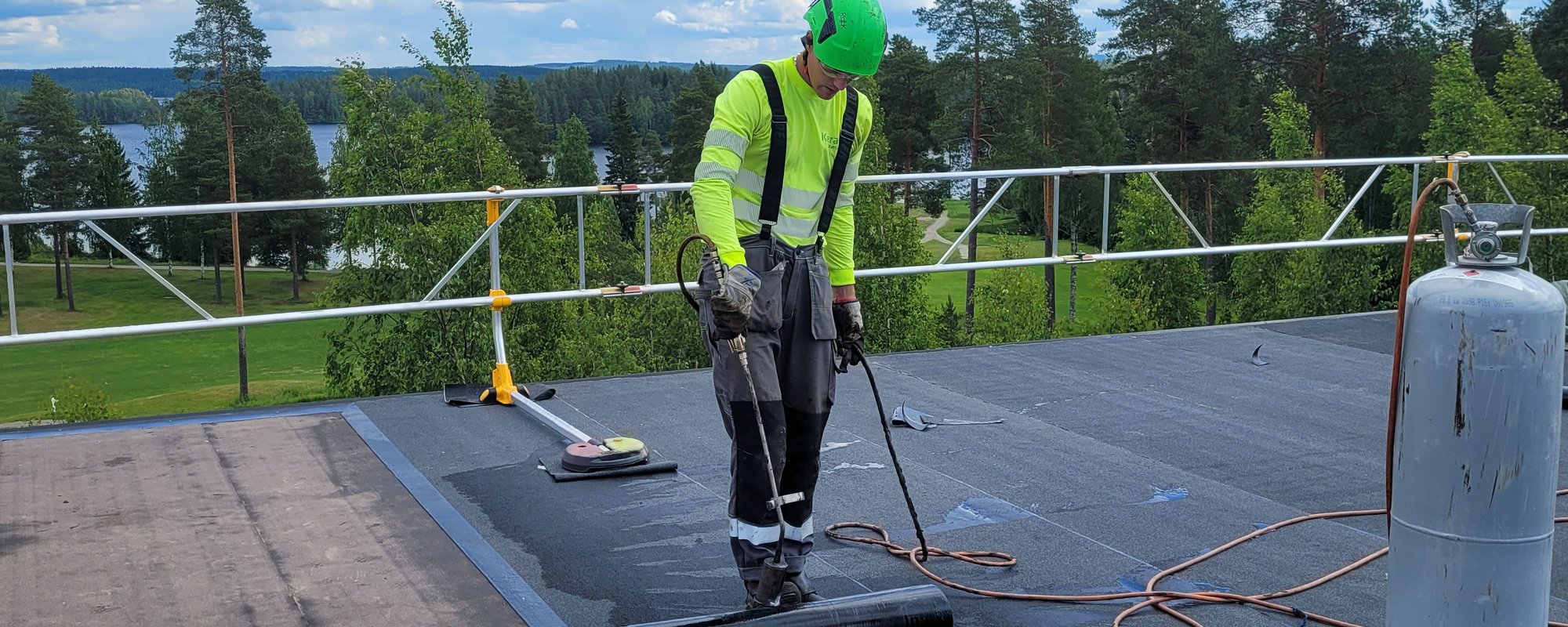
Kerabit is a Finnish construction company specialising in roofing and waterproofing solutions and the manufacture of bitumen products. It serves construction professionals and consumers, offering solutions for both new construction and renovation.
A shared model for proactive sales
Kerabit and Trainers’ House started working together. The first goal was to build a way of working actively with customers, and the second was to put it into practice in everyday work. The more active sales work also had to be managed so that the new ways of working would take root. Together, the two companies built a systematic approach to sales management, based on the principle that what gets measured gets managed.
The partnership kicked off with a training session. Kerabit’s sales experts were coached in a simple, practical way to increase customer activity despite their busy schedules.
“Proactive sales work has been at the core of what Trainers’ House does since the company was founded. I believe that when a company stays true to its roots, it’s in a strong position, and you can see that in how Trainers’ House works,” Metsämäki says.
Once the sales team had a clear understanding of what proactive sales work requires, they started putting it into practice. Sales initiative and active customer work were tracked and coached in weekly joint sales meetings.
“The Trainers’ House coach did good groundwork, and we had a few conversations about what we wanted from the partnership and how. But it was Trainers’ House that ran the weekly routine,” Metsämäki explains.
In the meetings led by the Trainers’ House coach, Kerabit’s experts also shared lessons and insights from their new, more active contact with customers.
“In the meetings, people from different regions shared their successes. It wasn’t just about what we were doing, but whether we were making progress and how it felt to do the work,” Metsämäki continues.
Activity increased within the first month
There were more new sales conversations and more requests for quotation generated on Kerabit’s initiative. Kerabit also identified more upselling opportunities with existing customers. In the first month alone, the sales experts had well over a hundred sales conversations with potential customers.
The experts agreed on a minimum weekly activity level, and they met it every week. Setting a minimum level and checking that it was met also increased CRM use and made sales activity transparent.
“Before, we didn’t have a model for tracking customer activity on the project side. During the partnership, we set a clear goal for measuring and managing customer activity, and we reached it,” Metsämäki sums up.
As a result of the partnership, Kerabit now has a new customer activity model that its Business Director can manage in everyday work.
“I admire how simple they’ve made this,” says Atte Korhonen, Kerabit’s Business Director.
Käytä H2 tason otsikkoa
Lisää tekstisisältöä
Here to help you